
Pole Barn Insulation and Condensation Control
Include the comfort and enclosure features you need in your Topeka-area pole-barn quote. Describe whether the building will be used for storage, occasional work or a regularly heated and cooled space so the proposed scope fits the way you will use it.
Request a Quote
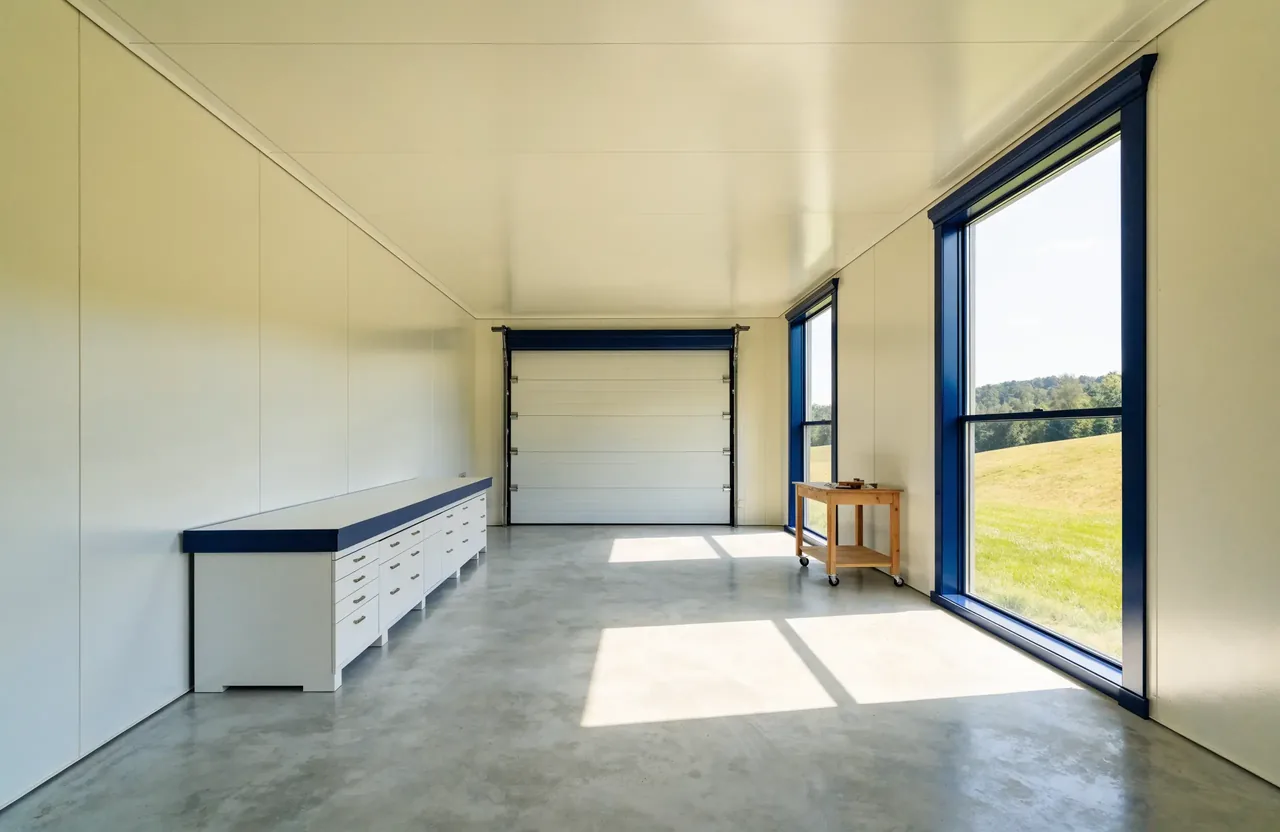
Start with the intended use and project location. You do not need to choose an insulation material or wall assembly before making contact.
Insulation choices for storage, garages and workshops
Unheated pole barn storage
Tell the builder what will be stored and whether you want open-sided cover or an enclosed building. A request to address moisture beneath a metal roof is a different task from creating a regularly conditioned room. Have the proposed roof and enclosure approach described rather than assuming a roof treatment also insulates the entire building.
Occasional garage or hobby-shop use
Explain when you expect to work inside, whether heating or cooling is planned and how often large doors will be open. If the building is mainly for parking with occasional projects, include those comfort decisions in the garage project scope. A short period of use does not, by itself, select the right assembly.
A heated or cooled pole barn workshop
Describe the working routine, equipment and interior finish you want. When you quote a workshop building, have the enclosure and intended heating, cooling and ventilation needs considered together. Ask which parts of the work a prospective builder can include and which require another trade.
Insulation, air sealing and vapor control do different jobs
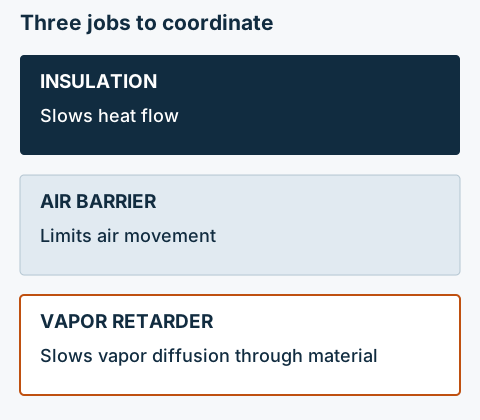
Insulation slows heat flow. It helps resist heat moving through the building enclosure. The material, its placement and installation all matter; a material label alone does not establish the performance of a completed wall or roof.
An air barrier limits air movement. Its continuity and connections matter because air can carry moisture through gaps in the enclosure. Ask how the proposed air-control approach addresses joints, openings and the connections between building parts.
A vapor retarder slows water vapor passing through a material. That is different from stopping air leakage. Whether one is needed, its properties and its position depend on the climate, building use and complete assembly. Do not choose a layer position from a generic pole-barn description.
Ask the proposal to explain how these functions work together. Some products can perform more than one role, but the selected product and its installation need to support that use. No single roll, board or coating should be assumed to provide every function.
Insulation materials within the wall or roof assembly
The useful question is where a material will be installed and what job it will do. Ask the builder to describe the proposed wall, roof or ceiling arrangement before comparing insulation names alone.
- Fibrous insulation: fiberglass, mineral wool and cellulose are examples of materials used to resist heat flow. Ask which product and installation method are proposed, how it is supported and what air-control and interior-finish work is included.
- Rigid foam boards: ask where the boards belong in the proposed assembly and how their joints, edges and connections will be handled. Board insulation and sprayed foam are different installation choices.
- Sprayed foam: identify the actual product, substrate, required coverings and installer responsibilities before accepting a generic “foam insulation” line. Confirm whether that installation is part of the building proposal.
- Reflective products: their function differs from bulk insulation. A reflective surface needs an adjacent air space to work as intended; a shiny facing alone does not establish the performance of the completed enclosure.
Ask for the specified insulation performance and the scope needed to achieve it, rather than adopting a universal R-value or thickness. Have applicable requirements established for the actual building and assembly.
Pole barn condensation: find the source of moisture
Moist air meeting a sufficiently cold surface can produce condensation. That possibility does not establish the cause of every damp patch or roof drip. If the request concerns an existing building, describe where and when moisture appears, whether it follows rain or a change in use, and what heating or ventilation is present.
Have the source and affected assembly assessed before selecting work. More insulation is not a universal answer to water entry, air leakage or moisture generated inside. Confirm whether a prospective builder handles the existing-building assessment or work you need; this page does not establish a separate insulation-only or repair service.
Ask what the ventilation is intended to serve
Discuss ventilation with the proposed enclosure, not as an unrelated accessory added afterward. Ask which space the ventilation serves, how air enters and leaves, and whether the approach is for the roof space, the occupied workspace or a particular activity.
Describe work that produces moisture or calls for separate exhaust. Have the appropriate professional determine what is needed for the actual use. A roof vent or a door left open should not be assumed to provide every ventilation function a workshop needs.
Include floor and finish decisions early
If a concrete floor will receive a coating or covering, identify that finish in the quote request. Slab moisture can affect moisture-sensitive finishes, so ask who checks the selected product's requirements and the floor's readiness. Wall insulation does not resolve that separate floor question.
Mention any future plans to heat or cool a building initially used for storage. Ask which provisions need consideration now and what would require later review or additional work. Future comfort or a condensation-free building cannot be promised from the shell description.
Request a quote with your comfort needs included
Tell us where you want to build, what will happen inside and whether heating or cooling is planned. Include the interior finish and floor work you want considered. If this is an existing-building request, say so and describe the concern so a prospective builder can review the project fit.
Prefer to talk? Call About Your Project — +1 785-384-4992.
How much does pole barn insulation cost?
No verified local installed range is available for this site. Ask for pricing around the complete proposed assembly and the surfaces being treated; the building’s floor area alone is not an insulation quantity.
Details that make insulation prices comparable
Identify walls, roof or ceiling surfaces, intended heating or cooling, the existing enclosure, access for installation and the interior finish. Ask who handles air sealing, moisture-control layers, ventilation and any necessary covering. A material price and an installed enclosure price cover different work.
Use the cost worksheet to enter the proposed insulation amount once, and the quote comparison to identify excluded parts of the assembly.