
RV and Boat Storage Buildings in Topeka
Make room for your RV, camper or trailered boat on your own property. Request a quote for a pole-barn storage building in Topeka, Kansas, with the opening, interior space and approach planned around what you need to store.
Request a Quote
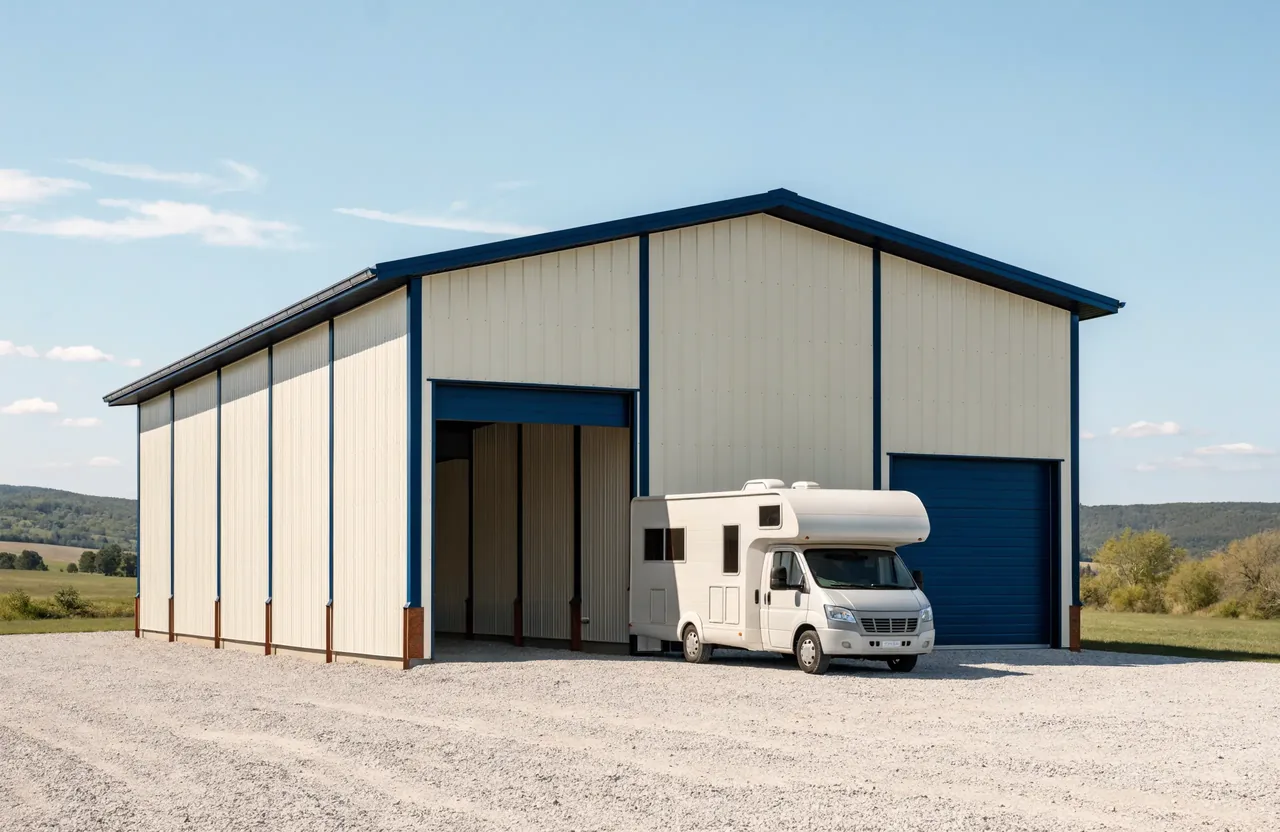
Tell us about the RV, boat and trailer you have now, plus any larger replacement you are considering. You can send the initial request before choosing exact building dimensions.
RV, camper and boat-trailer dimensions that matter
A vehicle's model name or a boat's advertised length is only a starting point. Share the overall measurements of what will actually enter and remain inside the building.
- For an RV: include overall height, width and length, with rooftop equipment, mirrors and other attachments accounted for in the configuration used to enter the building.
- For a trailered boat: include the trailer, tongue, motor and any equipment that remains raised or attached during entry and storage. Describe any difference between towing and stored configurations.
- For more than one item: explain whether each needs to come out independently, or whether moving one to reach another is acceptable.
Also describe what access you want while the item is parked: opening a storage compartment, walking alongside it or reaching equipment kept at the rear. These needs affect usable interior space beyond the item's parked footprint.
Use those details to measure vehicle fit and usable openings before settling the building dimensions. If measurements are not available yet, start with the item and the access you need; final fit still needs confirmation.
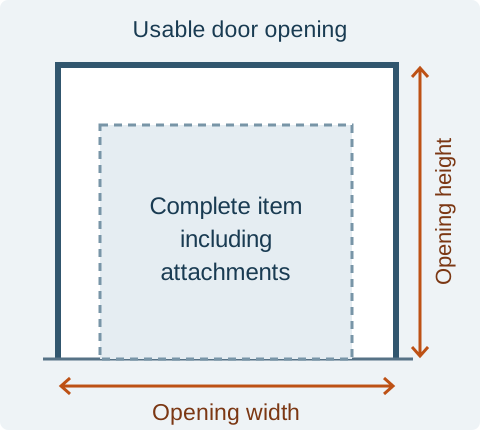
Storage building doors and usable vehicle clearance
The building's overall height, its usable interior height and the clear door opening are separate things to confirm. Ask for the actual usable opening of the proposed door and the space its operation requires.
An overhead door lifts upward and may use a powered opener. A sliding door travels sideways, so room beside the opening matters. Compare how the selected door works with the frequency of your trips and the space around the building. No door type or nominal building size establishes fit by itself.
Mention future changes that could affect the opening, such as a different RV or a boat with different trailer or attached-equipment dimensions. Ask what the proposed building accommodates rather than assuming it will suit any future purchase.
Plan the approach as carefully as the interior
Describe the route from the property entrance to the storage position. Gates, turns, nearby structures, overhead obstructions and changes in grade are useful details for the site discussion. A doorway that works in isolation still needs an approach that works for the actual vehicle or towing combination.
Decide whether you expect to back in, pull in and reverse out, or drive through. A drive-through arrangement needs a second opening and a usable route beyond it; it should be assessed against the available property space.
Review site access and delivery preparation before the construction sequence is agreed. Access for using the finished building and access for delivering building materials are both worth confirming.
Enclosed RV storage building or open-sided cover?
Describe whether you want enclosed storage, an open-sided covered area, or a combination. An enclosed proposal includes wall and door decisions; an open side changes how you enter and what remains exposed. Ask a prospective builder which arrangement it can quote for your project.
Include the floor surface, lighting and any electrical work you want considered. If you also want maintenance space, heating or cooling, describe that intended use rather than pricing the project as storage alone. A roof or enclosure should not be treated as a guarantee against condensation, theft or every weather event.
What changes an RV or boat building quote?
The height and footprint, selected openings, enclosure, foundation and floor scope, utilities, and work needed at the property all affect what must be priced. A second door or a different approach may change the scope as much as additional storage space.
Ask the proposal to separate the building work from grading, approach surfaces, concrete, electrical work and other options. Confirm who supplies each part and what is excluded. Share the actual project location so the builder can assess the site and identify the approvals and design review that apply.
Questions before you request a storage-building quote
How do I choose a size for an RV or boat storage building?
Start with what you need to store, how you want to enter and how much access you need around it. Share measurements when available. The final building, door and site arrangement need to be reviewed together.
Can the building accommodate both an RV and a boat?
Describe both items and whether you want to retrieve either without moving the other. Include the boat's trailer and any additional storage. That gives the layout discussion a clear task; it does not assume a standard two-space building will fit.
Can I include power or use the RV inside?
State exactly what you intend, including any electrical connection, maintenance or occupancy. Storage, working on a vehicle and occupying it are different requests. Confirm the proposed use and utility work with the builder and appropriate authority; a storage-building quote does not establish permission to live in an RV.
Request a quote for your RV or boat storage building
Tell us where you want to build and what needs to fit. Include available overall measurements, trailer details and your preferred entry arrangement. Start with the details you have.
Prefer to talk? Call About Your Project — +1 785-384-4992.
How tall should a pole barn be for an RV?
Confirm the actual travel height, installed clear door opening and unobstructed interior path together. The RV door-height measurement guide explains why eave height alone cannot confirm fit.